
Hydroforming vs. Stamping: Their Differences
Contents
Forming technology refers to the processes used to shape materials—typically metals, plastics, or other malleable substances—into specific components or products with precise dimensions and characteristics. Forming technologies are a cornerstone of the manufacturing industry, playing an indispensable role across sectors such as automotive, aerospace, construction, medical, and consumer electronics.
Nearly all mechanical components and consumer goods depend on metal forming processes to achieve their final shape and functionality. Advances in these techniques allow companies to respond swiftly to market changes and offer a diverse range of products. Two notable forming technologies, hydroforming and metal stamping, each bring distinct advantages and applications to the industry.
What is Hydroforming?
Hydroforming is a versatile metal fabrication technique that uses pressurized fluid to mold ductile metals into precise shapes with the help of pre-designed dies or plates. This process is renowned for its speed, efficiency, and cost-effectiveness, significantly minimizing material waste while ensuring strong and durable components. Compared to traditional methods like stamping, hydroforming excels in creating intricate, asymmetrical, or highly complex shapes. It is particularly suitable for materials such as carbon steel, stainless steel, copper, aluminum, bronze, and brass.

Advantages of Hydroforming
1. Manufacturing Complex and High-Strength Components
Hydroforming excels in creating complex metal parts with intricate geometries. High-pressure liquid ensures precise shaping, meeting stringent design requirements. This is particularly critical for components such as automotive structural frames and aerospace fuselage parts, where strength and durability are essential. Hydroforming enhances structural integrity and performance in high-stress environments, boosting product safety and reliability.
2. Room-Temperature Operations
Unlike traditional heat-based processes, hydroforming operates at room temperature. This reduces energy consumption and minimizes risks of material embrittlement. Metals retain their original properties, resulting in final products with superior toughness and ductility. These features make hydroforming a safer and more cost-effective choice across industries.
3. Reduced Welding Needs
Hydroforming minimizes the need for welding by producing complex structures in a single forming process. This simplifies production, reduces defects and strength loss associated with welding, and shortens production time, lowering overall costs.
4. Smooth Surface Finishes
Hydroformed components typically feature smooth, even surfaces. High-pressure liquid eliminates surface irregularities, enhancing aesthetic appeal and preparing parts for subsequent treatments such as painting or plating. This improves both durability and visual quality.
5. High Material Utilization
Hydroforming maximizes material usage by reducing waste from cutting processes. Unlike traditional methods that generate excess scrap, hydroforming efficiently uses raw materials, lowering costs and aligning with sustainability goals—a significant competitive edge in today’s environmentally conscious market.
Disadvantages of Hydroforming
1. High Equipment Costs
Hydroforming equipment is expensive, posing a challenge for small enterprises. The initial investment can create financial strain, requiring careful cost-benefit analysis.
2. Longer Production Cycles
The process, including material loading, pressure application, and curing, takes time, making hydroforming less suitable for rapid production needs compared to techniques like injection molding.
3. Material Limitations
Not all materials are suitable for hydroforming, particularly those resistant to shaping under high-pressure liquids. For example, brittle materials like cast iron lack the ductility required for deformation, high-strength ceramics can crack under pressure, and low-ductility alloys such as magnesium-based alloys may fracture during the process. This limits its applications in certain industries.
Applications of Hydroforming
1. Automotive Components
Hydroforming is vital for manufacturing automotive parts like exhaust pipes and structural frames. It produces components with enhanced rigidity and safety, such as engine brackets, radiator supports, and chassis structures, improving performance and fuel efficiency while reducing weight.
2. Aerospace Components
Aerospace applications include crafting lightweight, high-strength fuselage structures. Hydroforming ensures precise shaping and durability, enabling safer and more efficient aircraft designs.
3. Medical Equipment
Hydroforming produces precision shells and tools in the medical field. These devices require high accuracy and reliability to ensure safety and functionality in clinical use. Its low material waste also reduces production costs.
4. Food Processing Machinery
In food processing, hydroforming creates high-quality stainless steel containers with excellent corrosion resistance and hygiene, ensuring food safety and structural durability.
5. Agricultural Machinery
Agricultural applications include producing high-strength structural components, such as tractor frames. Hydroforming enhances rigidity while reducing weight, boosting efficiency and fuel economy.
What is Metal Stamping?
Metal stamping is a manufacturing process that uses molds and mechanical pressure to cut, bend, and shape metal into specific forms. It is known for its speed, precision, and efficiency, making it ideal for mass production in industries like automotive and electronics. The process minimizes material waste and delivers consistent, high-quality results, even for complex designs.
Advantages of Metal Stamping
1. High Production Speed
One of the greatest advantages of metal stamping technology is its exceptionally fast production speed. Each workpiece requires relatively little time to manufacture, making it particularly well-suited for large-scale production. During the production process, stamping machines can perform repetitive operations at very high speeds, allowing more products to be produced within the same timeframe. This high efficiency makes metal stamping an ideal choice for many industries, especially in high-demand scenarios, as it can quickly meet market needs while reducing unit costs.
2. Suitability for Repetitive Production
Metal stamping technology is highly suitable for repetitive production, as it allows for mass manufacturing using the same set of molds. This means that once the molds are designed and fabricated, identical parts can be continuously produced without the need for additional adjustments. This efficient production method not only saves time and labor costs but also enhances product consistency and quality control, enabling businesses to maintain a competitive edge in a demanding market.
Disadvantages of Metal Stamping
1. Challenges with Complex Shapes
Although metal stamping offers numerous advantages, it has certain limitations when it comes to forming complex-shaped components. For parts with intricate details or asymmetrical structures, metal stamping may struggle to deliver the desired results, as mold design must account for material flow and stress distribution during the forming process. This limitation often leads businesses to explore alternative forming technologies to meet specific design requirements in certain applications.
2. High Tooling Costs
The design and manufacturing of molds for metal stamping often involve significant costs. This is because molds must be precisely tailored to specific products to ensure efficient stamping operations. For small-scale or customized production, the return on investment for molds may not be as favorable as it is for mass production. Thus, metal stamping is generally better suited for large-scale manufacturing rather than small-batch customization.
3. Material Waste
The metal stamping process often generates scrap and leftover materials, leading to material waste. When raw materials are cut into the desired shapes, the edges are typically not fully utilized, increasing production costs. While some companies recycle these scraps, the economic loss caused by material waste cannot be entirely eliminated.
4. Potential for Material Brittleness
In some cases, the heating involved during the metal stamping process can negatively affect material properties. Localized overheating caused by strong mechanical forces may lead to metal brittleness or internal defects. Therefore, temperature and stress must be carefully controlled during design and operation to ensure the quality and performance of the final product.
Applications of Metal Stamping
1. Electronic Device Housings
Metal stamping plays a vital role in manufacturing housings for electronic devices such as smartphones and computers. These devices require lightweight yet durable enclosures to protect internal components. With precise mold designs, metal stamping provides an efficient and cost-effective solution to produce housings that meet standard sizes and shapes while maintaining excellent surface finishes.
2. Automotive Parts
The automotive industry is another major field where metal stamping is widely applied, including for components like body panels, door frames, and brackets. These parts need to have high strength and durability to withstand various stresses during vehicle operation. Metal stamping enables the production of a large volume of standardized parts efficiently while maintaining consistency and reliability, contributing to overall vehicle performance.
3. Medical Components
In the medical device industry, metal stamping is extensively used for products like stainless steel surgical tools. Since medical instruments demand high precision and strict hygiene standards, metal stamping offers high-quality results that meet these requirements. Its efficiency and cost-effectiveness also allow manufacturers to bring new products to market more quickly.
Hydroforming vs Stamping
Hydraulic forming and metal stamping each demonstrate different advantages within their respective applications. Hydraulic forming is particularly suitable for manufacturing high-precision and complex-shaped parts, while metal stamping excels in mass production of standardized components. The choice of the appropriate forming technology depends on the specific product requirements and production demands.
| Hydroforming | Metal Stamping | |
| Technology Principle |
|
|
| Material Utilization |
|
|
| Complexity of Finished Product Shapes |
|
|
Conclusion
Both hydroforming and metal stamping play pivotal roles in manufacturing, each offering unique advantages. Hydroforming stands out in applications requiring precision and material efficiency, while metal stamping excels in high-speed mass production. By understanding these technologies’ strengths and limitations, industries can choose the most suitable method to optimize production and meet evolving market demands.
If your manufacturing needs include hydraulic forming technology, feel free to consult Wetori. We are dedicated to providing high-quality hydraulic forming machines to meet diverse production requirements. Contact us now and make Wetori your trusted manufacturing partner!
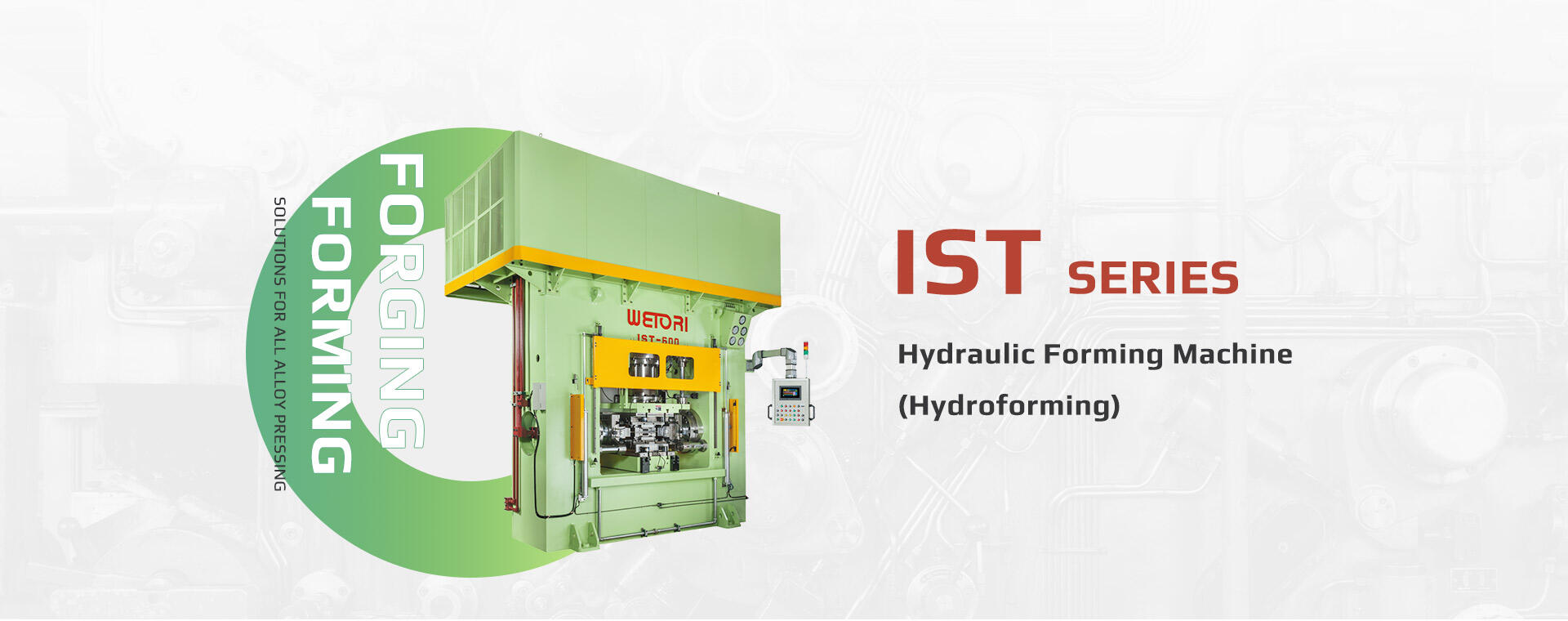
▲Check out our IST Series Hydraulic Forming Machine!