
Understanding Hydroforming: Advantages and Process
Contents

Hydroforming is an advanced metal-forming process that uses high-pressure hydraulic fluid to shape metal into lightweight, high-strength components. It eliminates the need for welding multiple parts by forming complex geometries in a single step, reducing material waste and improving structural integrity.
This guide breaks down the hydroforming process, its advantages, and industry applications. Understanding its capabilities helps manufacturers improve production efficiency, reduce costs, and enhance product performance.
What Is Hydroforming?
Unlike traditional stamping or welding, hydroforming uses pressurized hydraulic fluid to expand metal sheets or tubes into custom dies, creating parts with superior precision and structural integrity. The process relies on controlled fluid pressure to evenly distribute force across the material, ensuring uniform thickness and eliminating weak points. This approach allows for intricate shapes that would be difficult or impossible to achieve with conventional manufacturing methods. By forming a single, continuous piece, hydroforming reduces the need for additional welding or joining, minimizing material waste and post-processing requirements.
Compared to traditional stamping, hydroforming enhances precision by reducing spring back and material distortion. Unlike welded assemblies, hydroformed components maintain structural consistency, improving durability and performance. The process also optimizes material usage, cutting down on excess scrap while maintaining strength.
Hydroforming is widely used in automotive, aerospace, and industrial manufacturing. Automakers use it for chassis components, engine cradles, and exhaust systems, making vehicles lighter and more fuel-efficient. Aerospace manufacturers rely on hydroforming for high-performance tubing and structural components that must endure extreme stress. The bicycle industry benefits from hydroforming's ability to create lightweight yet durable frames. Plumbing and hardware manufacturers also use the technique to produce seamless, high-strength metal components.
Types of Hydroforming
Hydroforming is categorized into two main methods: tube hydroforming and sheet hydroforming, each suited for specific manufacturing applications.
Tube Hydroforming
It shapes hollow metal tubes by injecting high-pressure hydraulic fluid into them while they are enclosed within a die. As pressure increases, the tube expands and conforms to the die's shape. This method is widely used to produce lightweight, high-strength components such as chassis structures, exhaust systems, suspension parts, and bicycle frames. It enhances part uniformity, reduces welding requirements, and improves structural integrity by forming a single, seamless piece.
Sheet Hydroforming
It applies hydraulic force to sheet metal instead of tubes. A sheet is placed over a die and pressed into shape using controlled fluid pressure, allowing for the production of complex, lightweight structures with smooth surfaces and minimal material waste. This method is commonly used for aerospace components, appliance panels, and high-performance automotive parts that require intricate geometries and superior strength.
Both hydroforming techniques improve efficiency, reduce material waste, and enhance product performance, making them essential in industries that require precision, durability, and lightweight design.
Key Components of a Hydroforming Machine
A hydroforming machine consists of several essential components, each playing a critical role in shaping metal with precision and efficiency.
1. Hydraulic System: The hydraulic system generates and regulates the high-pressure fluid required for forming metal. It ensures consistent pressure distribution, allowing for uniform deformation without cracks, thinning, or defects.
2. Die and Molds: These are custom tooling components that define the final shape of the hydroformed part. They are designed to withstand extreme pressure while ensuring precise, repeatable shaping of metal components.
3. Control Unit: The control unit manages the automation of the hydroforming process, regulating pressure levels, timing, and forming sequences. Modern machines use sensors and software-driven systems to maintain accuracy and reduce variations between parts.
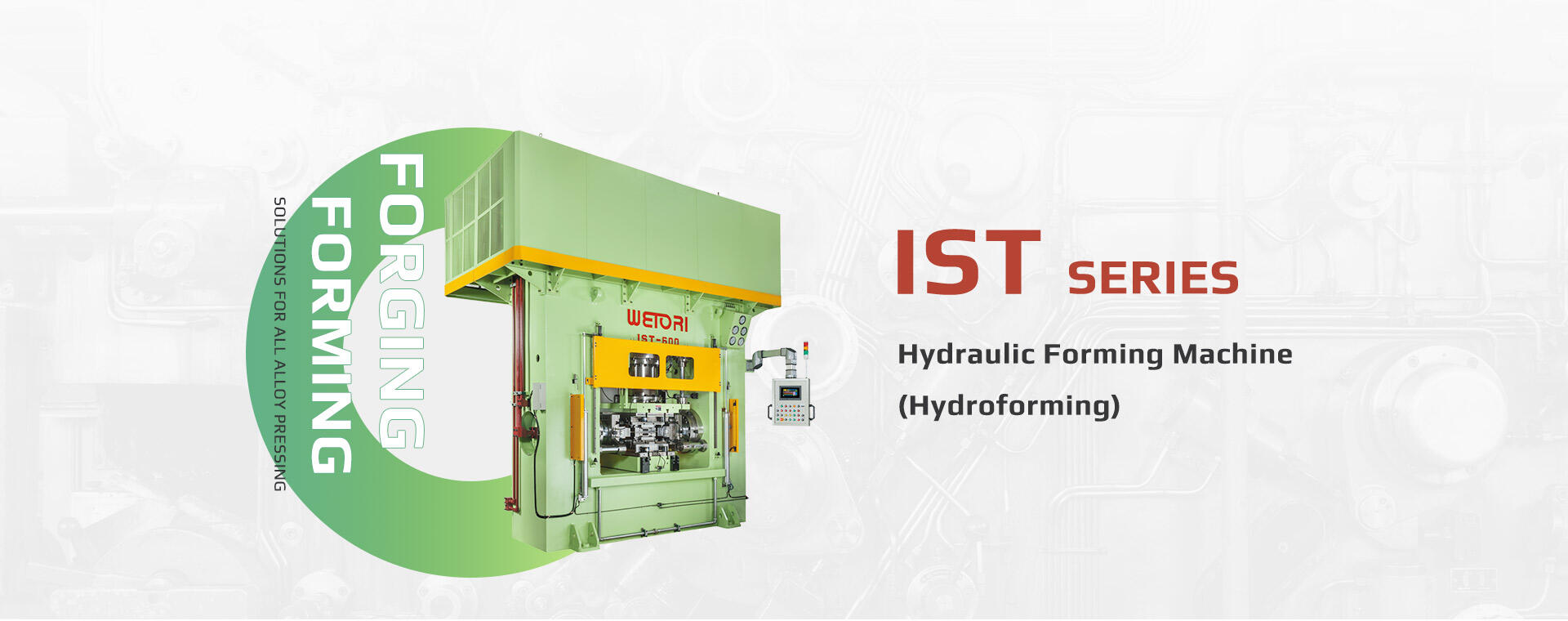
4. Press Frame: The press frame provides structural support and stability for the entire machine. It holds the die, absorbs forming forces, and prevents misalignment, ensuring uniform application of pressure throughout the process.
Step-by-Step Hydroforming Process
1. Material Preparation:
The process begins with selecting a suitable metal, such as aluminum, steel, titanium, or brass. The material must have sufficient ductility to withstand high-pressure forming without cracking or excessive thinning.
2. Die Placement:
The metal sheet or tube is positioned inside a custom-designed hydroforming die. Proper alignment is crucial to ensure uniform forming and prevent defects. The die defines the final shape of the component.
3. Fluid Injection:
High-pressure hydraulic fluid is introduced into the metal tube or applied against the sheet. The fluid pressure gradually increases, forcing the metal to expand and take the shape of the die. This controlled forming process minimizes material stress and ensures consistency.
4. Shaping and Expansion:
As the pressure reaches its peak, the metal conforms precisely to the die’s contours. The process ensures uniform thickness distribution, reducing weak points and material waste while enhancing structural integrity.
5. Final Processing:
Once formed, the component undergoes finishing processes such as trimming, deburring, and surface treatment. Quality inspections ensure dimensional accuracy and defect-free surfaces before the part moves to assembly or further processing.
Advantages of Hydroforming
- High precision – Forms complex geometries with tight tolerances, reducing the need for secondary machining.
- Material efficiency – Optimizes raw material usage by minimizing scrap waste, lowering overall material costs.
- Enhanced strength – Cold forming work hardens the material, improving durability and mechanical performance without additional heat treatment.
- Minimal welding required – Creates seamless components, reducing weld joints, lowering assembly time, and improving structural integrity.
- Superior surface finish – Produces smooth, high-quality surfaces that require little to no additional polishing or finishing.
- Cost-effectiveness – Reduces labor-intensive steps, shortens production cycles, and minimizes material waste, making the process more economical than traditional stamping or welding.
Applications of Hydroforming
- Automotive industry – Used for manufacturing fuel rails, engine cradles, exhaust components, bumpers, and chassis parts. Hydroforming enables the production of lightweight yet strong components that improve vehicle performance, fuel efficiency, and crash safety. The process reduces welding requirements, ensuring seamless, high-integrity structures.
- Bicycle manufacturing – Applied in producing lightweight and durable frames, handlebars, and tube components. Hydroforming allows for aerodynamic and structurally optimized designs, reducing weight while maintaining strength. This enhances ride quality and durability, especially in high-performance and competitive cycling.
- Aerospace sector – Utilized for complex piping systems, multi-way connectors, and structural components that require high precision and strength. Hydroformed aerospace parts withstand extreme pressures and temperatures, making them essential for fuel and hydraulic systems in aircraft.
- Plumbing and hardware – Used to create high-strength valves, faucets, and custom-shaped metal pipes. Hydroforming ensures uniform wall thickness and eliminates weak weld seams, improving durability in high-pressure applications such as water and gas distribution.
Frequently Asked Questions (FAQ)
1. What liquid is used in hydroforming?
Hydroforming relies on high-pressure fluids to shape metal components accurately. The type of liquid used depends on the specific application and material requirements. Water, hydraulic oil, or a specialized fluid mixture is commonly used. Water-based solutions are preferred for applications requiring eco-friendly and cost-effective forming, while hydraulic oil offers better lubrication and pressure control for high-precision parts. Some processes use a combination of both to balance efficiency and performance.
2. What materials can be used in hydroforming?
Hydroforming is compatible with aluminum, steel, brass, titanium, and copper, among other ductile metals. Aluminum is widely used in the automotive and aerospace industries for its lightweight properties and corrosion resistance. Steel provides strength for structural and high-stress applications. Brass and copper are preferred for plumbing and electrical components due to their malleability and conductivity. Titanium is used in aerospace and medical applications for its exceptional strength-to-weight ratio.
Conclusion
Hydroforming is a key manufacturing process for producing lightweight, high-strength components with precision and efficiency. It reduces material waste, minimizes welding, and allows for complex geometries that traditional forming methods struggle to achieve. Industries such as automotive, aerospace, and plumbing rely on hydroforming to improve product durability and streamline production.
Manufacturers looking to optimize performance and reduce costs need advanced hydroforming technology. High-precision machines ensure consistent quality, faster production cycles, and minimal post-processing.
Since 1987, Wetori has upheld "Quality, Integrity, Innovation, Service." We've advanced eco-friendly hydroforming and introduced the "Ultra-High-Pressure Cold Water Injection Forming Machine," which uses clean water pressure forming to reduce environmental impact. Key features include energy saving, high-precision control, and automation. The mechanical design allows for vertical motion, with hollow forging extraction technology paired with ultra-high-pressure water injection forming, and features multi-axial automatic functions. This hydroforming equipment is suitable for high-strength steel and aluminum alloy forging, enhancing lightweight, precision, and cost-efficiency. It has production capacities of up to 12,000 tons. Our solutions cater to aerospace, automotive, bicycles, and more.
To explore our cutting-edge hydroforming solutions, visit IST Series Hydroforming Machines. Please feel free to contact us if you require further information.